


Foraging PackdaNet
The back pocket backpack
Found morels on the trail? Bought more than you planned at the farmer’s market? Pull a backpack out of your back pocket.
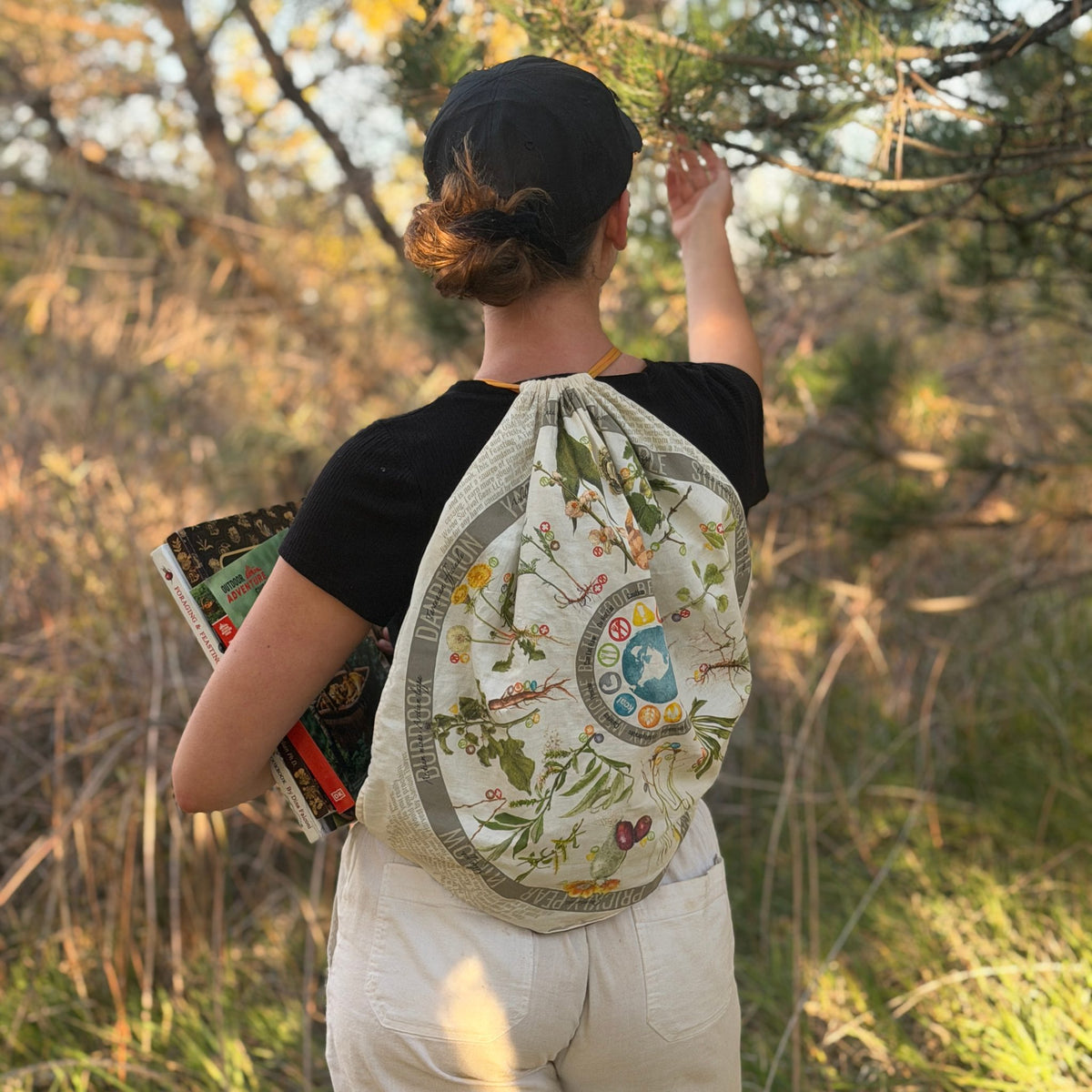
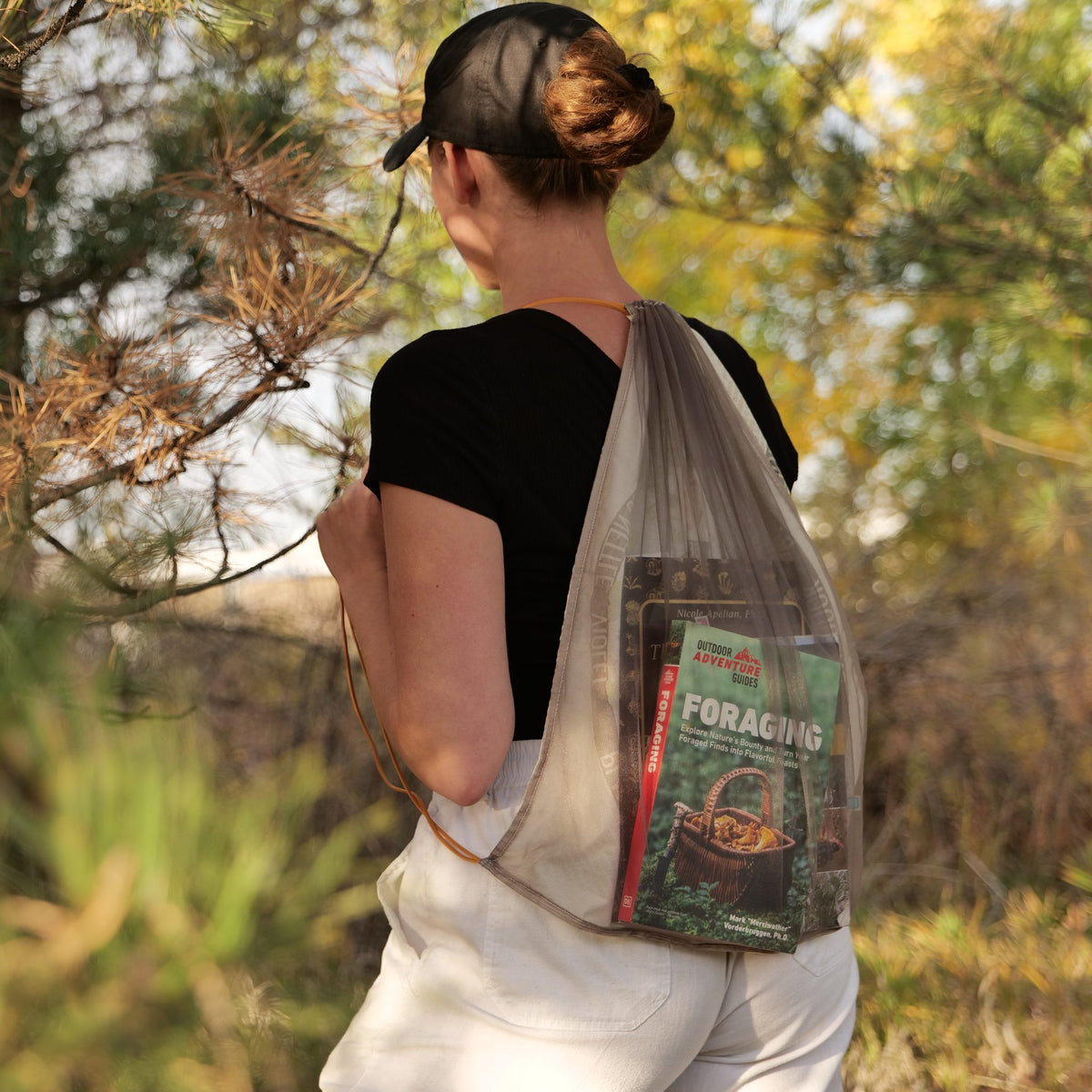
PackdaNet combines a foraging field guide, a gathering bag, mesh netting, and a cinch backpack into one pocket-sized package. Made in the USA. Just 2.1 oz, and packs down to the size of a bandana.
FREE U.S. SHIPPING $65+
Foraging PackdaNet
Features, Specs & Uses
Uses
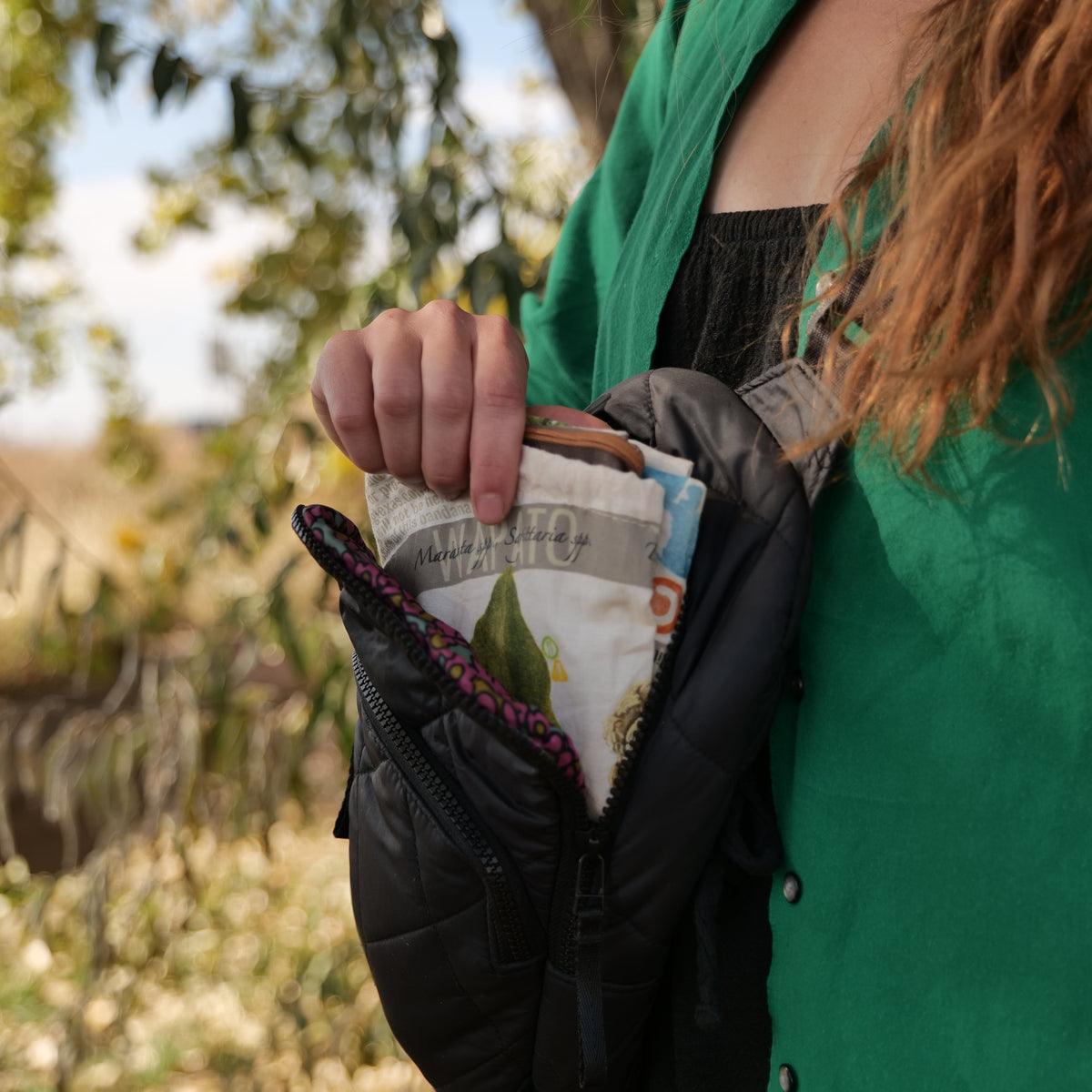
Packable Backpack - Cache in your pack, purse, or back pocket, so you always have an extra backpack in case you find a nice foraging surprise or just need a grocery bag at the market.
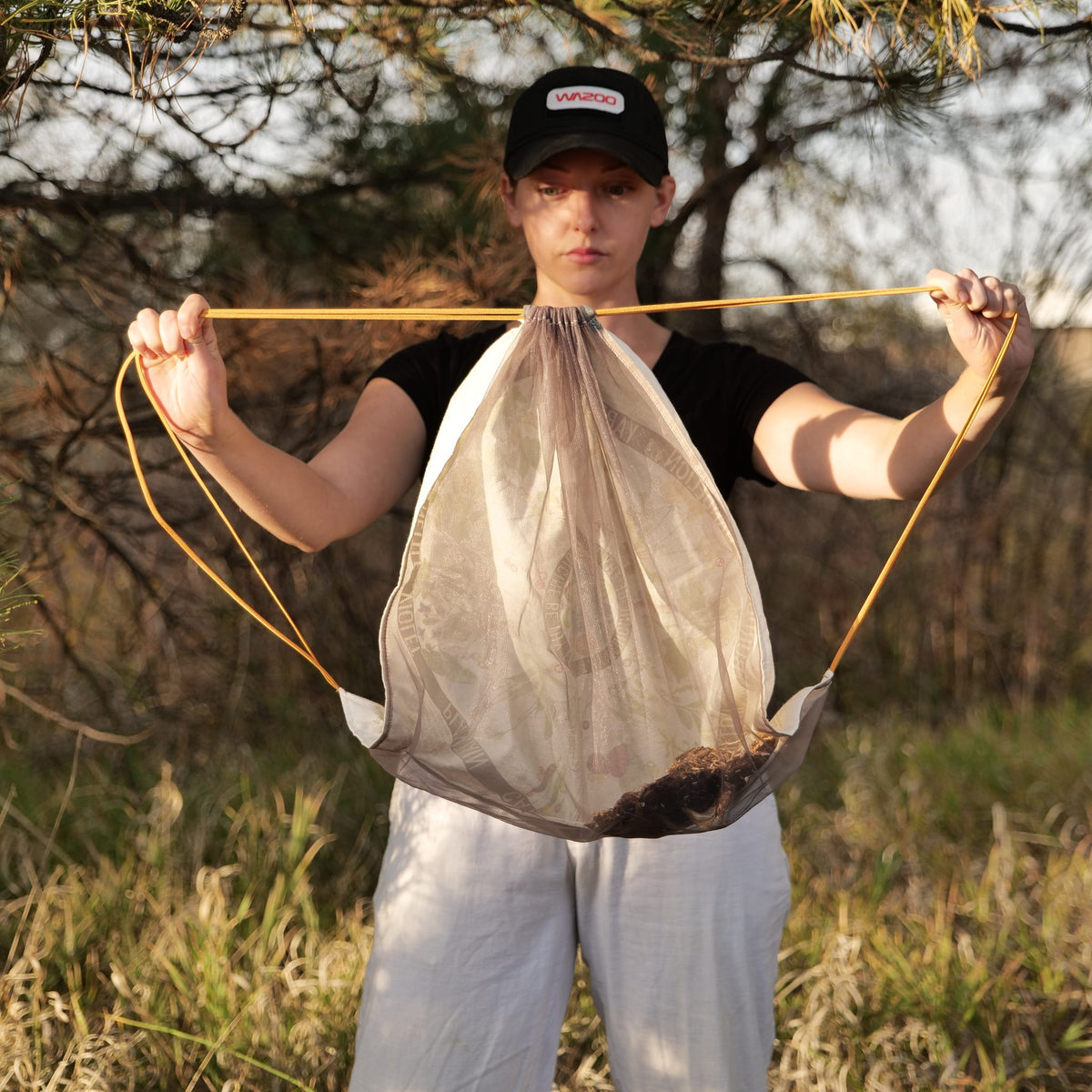
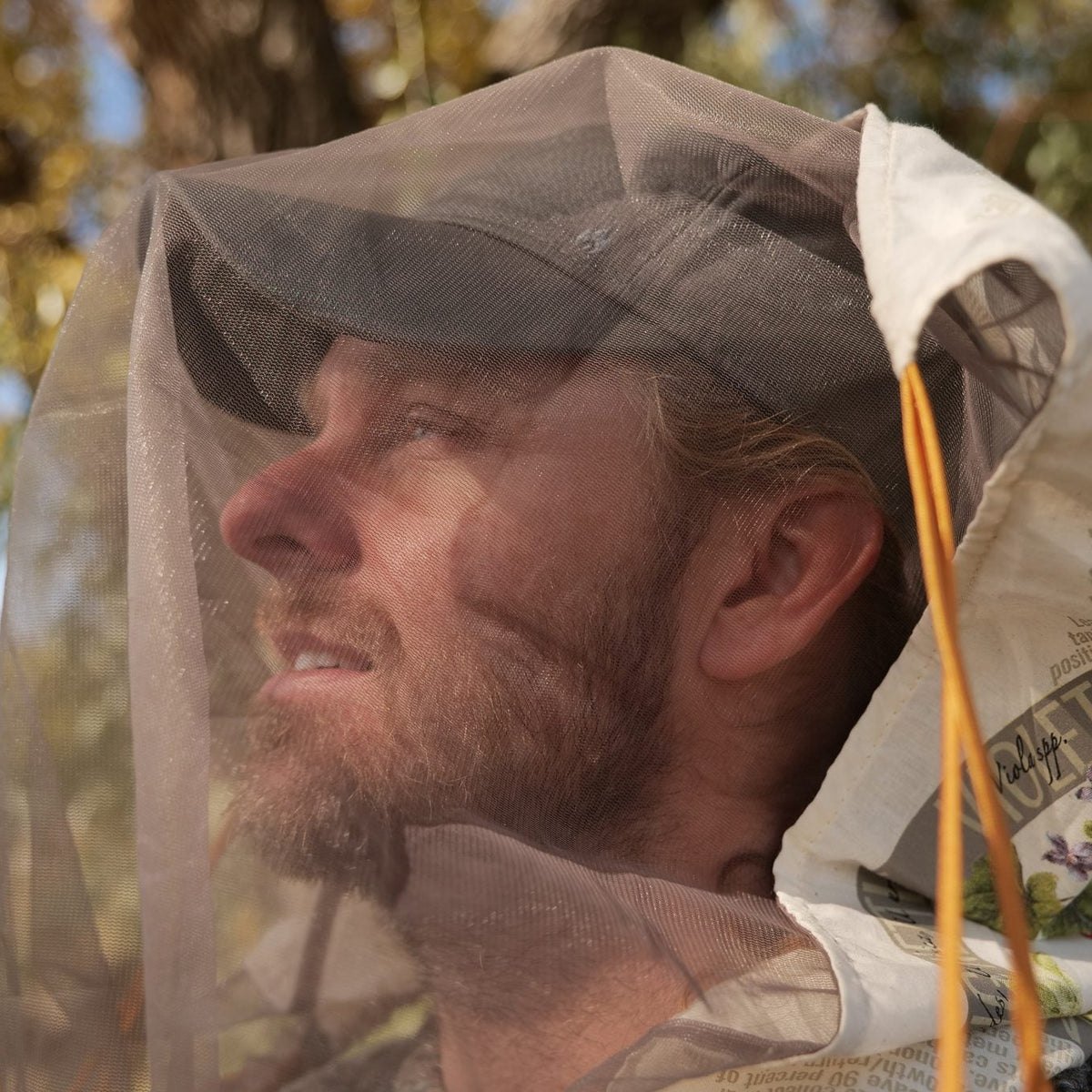
Bugnet - Made of special purpose "NoSeeUm Mesh" means that insects like mosquitoes or "no-see-ums" AKA biting midges, can't bite through. Simply put the PackdaNet on your head to use in this way. *Tested and approved to protect against pesky mosquitoes in the Amazon rainforest to the Wadi Rum desert by Dustin, co-founder.
Tinder Pouch - Dustin discovered this one on a Pathfinder School survival course. All the Tulip Poplar inner bark was soaked through from days of rain, which was needed that night for starting a bow drill fire. The rule at the course is that you have to keep all of your gear with you at all times and are required to perform tasks all day. Throwing the Poplar bark in the Bandanet and then hanging it on the back of the backpack allowed the sun to penetrate through the mesh while allowing the moisture to evaporate.
Net - Not only can you catch small aquatic creatures in it, but you can also keep them submerged and alive inside
Filtration - The tiny mesh can be used to pre-filter water of debris
Field Pillow - Stuff some clothes inside, tie closed. Poof! You have a pillow
River Fridge - Throw beverages in, tie to a branch, dangle in a river, and enjoy a chilled beverage
Strainer - From herbal tea infusions and decoctions to leaching tannins from nuts
Features
- Made in the USA: Cut-and-sewn, screen-printed, and finished across U.S. facilities, using American parts and labor.
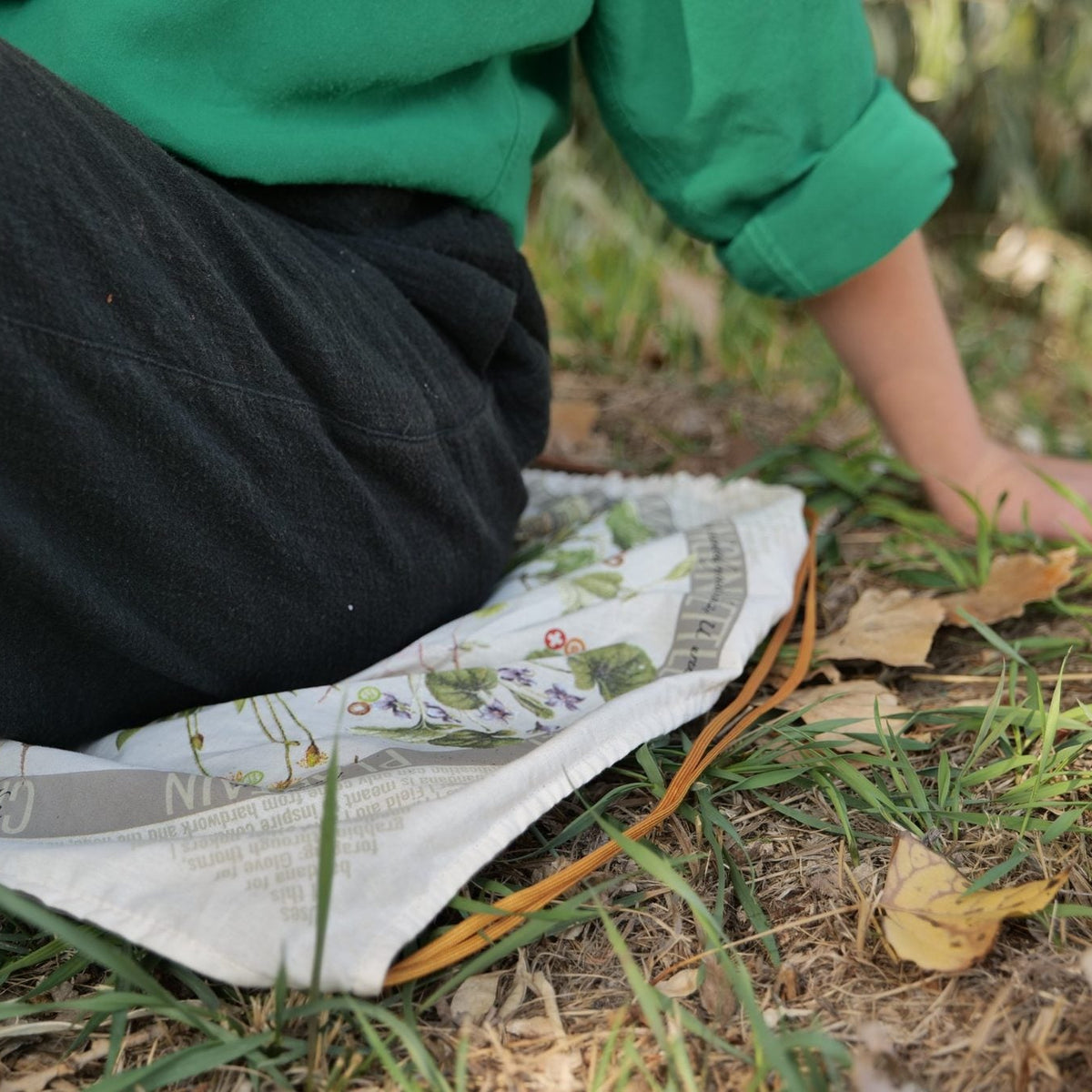
- Bandana to backpack: A 21-inch square that cinches into a backpack and folds small enough for a pocket or purse.
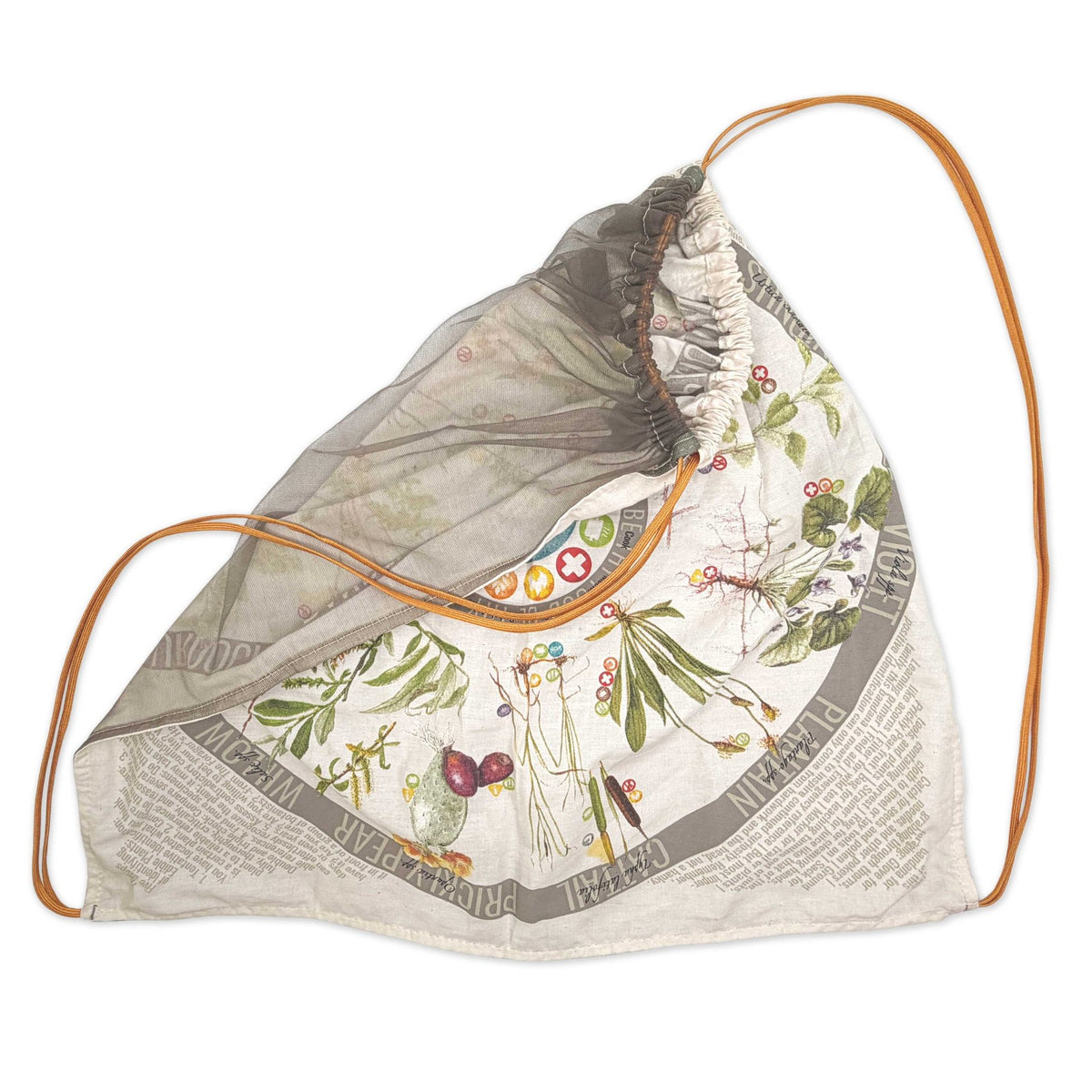
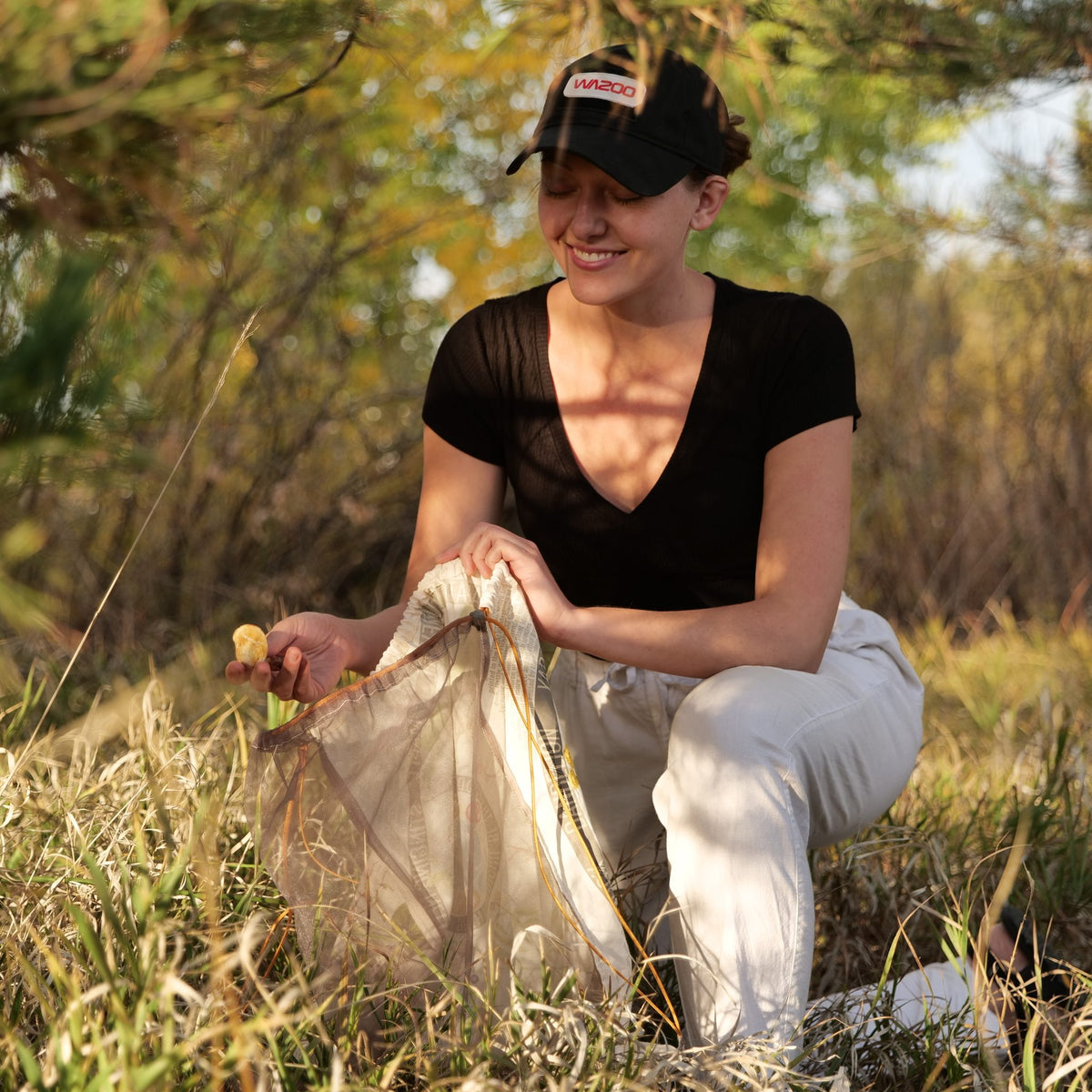
- Breathable mesh pocket: Airflow helps keep gathered plants and fungi from getting soggy, while loose mushroom spores can disperse as you walk.
- A net full of uses: Catch crawfish, hold fish in the water, sift sand for a lost ring, strain acorns, pre-filter water debris, or cool drinks in a stream. *All real uses reported from users.
- Head bug net: Pull it over your head to put NoSeeUm mesh between you and biting mosquitoes and midges.
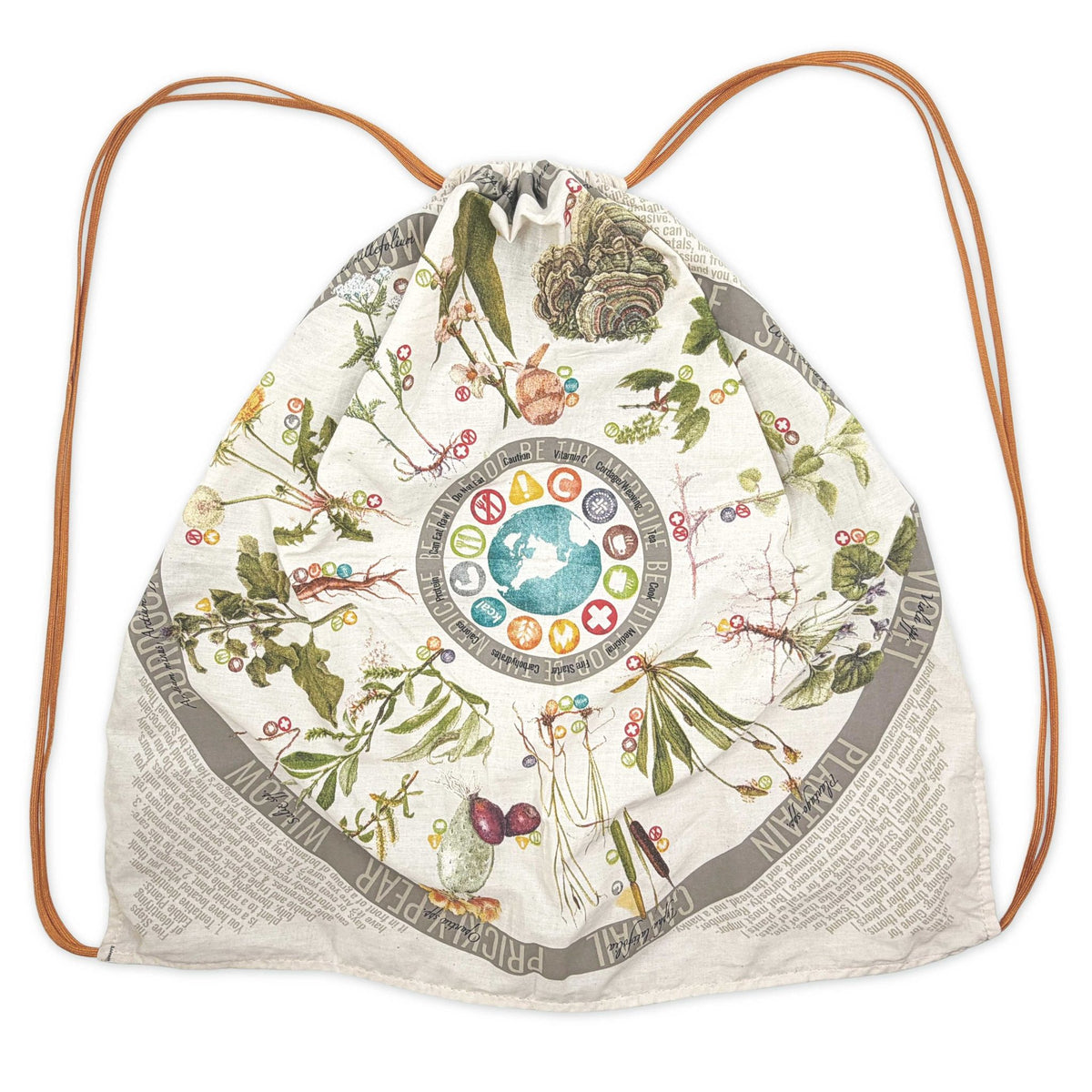
- Cotton bandana and field guide: The 100% cotton bandana is one of Dave Canterbury’s 10 C’s. Use it as a sit pad or wipe. Its botanical illustrations feature 12 North American edible plants and fungi, with plant-part icons, plus foraging guidance from Samuel Thayer and Dr. Mark “Merriwether” Vorderbruggen.
Plants Illustrated
- Arrowhead / Wapato (Sagittaria spp.)
- Burdock (Arctium minus, A. lappa)
- Prickly Pear Cactus (Opuntia lindheimeri)
- Cattail (Typha latifolia)
- Dandelion (Taraxacum officinale)
- Maple (Acer spp.)
- Turkey Tail Mushroom (Trametes versicolor, Coriolus versicolor)
- Plantain (Plantago spp.)
- Stinging Nettle (Urtica chamaedryoides, U. dioica, U. urens)
- Wild Violet (Viola spp.)
- Willow (Salix spp.)
- Yarrow (Achillea millefolium)
*Although the plant representations are scientifically accurate and information expert-backed, denoted characteristics featured on this bandana are in no way intended to be a source of proper identification, use, or processing of plants.
Specs
- Dimensions – 21” x 21” Square
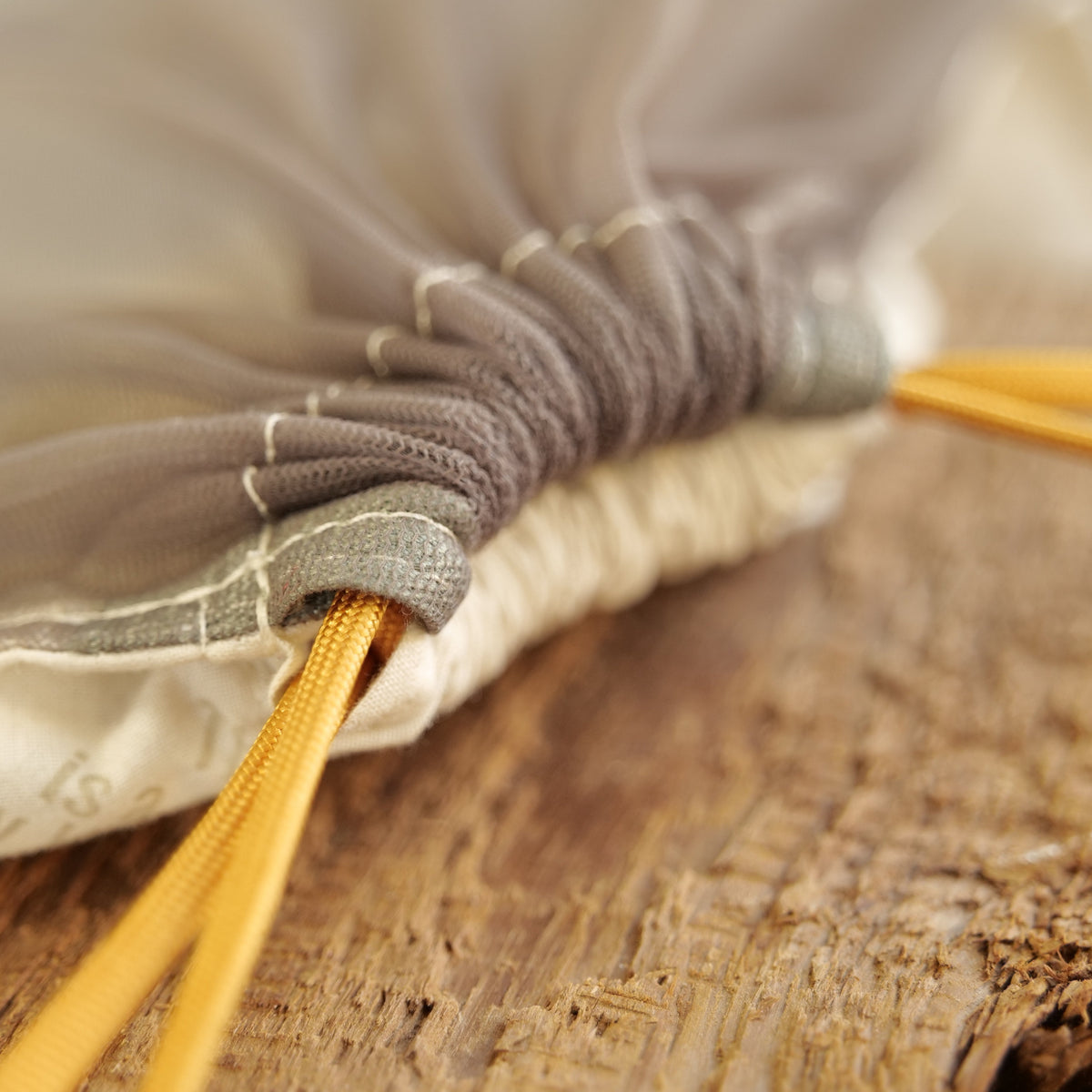
- Materials – 100% cotton fabric, micro mesh polyester netting, gutted 550 nylon paracord
- Weight – 2.1 oz / 60 grams
- Made in the USA - All of it. Fabric, printing, and sewing. We enlist 3 different factories to build these things!
- Reinforced - Paracord straps are professionally bartacked. Cord channel ends are sheathed with protective ribbon.
- Inspired by the original BandaNet design created by Ben’s Backwoods.
Featured in:

A field guide that turns into a pack
Multifunctional and compact: A 21-inch cotton bandana printed with a guide to 12 North American edible plants and fungi. Add a fine mesh. a cinch cord, and straps, and it becomes a gathering bag, head net, or backpack that folds into your pocket.
Excellent for impromptu foraging, any any time a practical pack is needed.
Made in the USA: The bandana is cut and sewn in South Carolina, screen-printed in California, then finished with the mesh and cinch straps in Colorado.


the foraging experts
Consulting with foraging experts on design of the Foraging Bandana was of the utmost importance to us. We chose to work with Dr. Mark “Merriwether” Vorderbruggen and Dr. Nicole Apelian, two expert foragers and now friends of Wazoo.
We worked with these experts to choose the wild edibles to feature based on the following criteria: 1. abundance in North America, 2. ease of identification, 3. few or no poisonous look-a-likes, 4. ability to represent on a bandana, and 5. ease to process into its usable form. With their help, we narrowed down our list to the 12 plants and fungi featured.
The Foraging Bandana is an original design by Wazoo Gear.

Dr. Nicole Apelian
Dr. Nicole Apelian is an herbalist, author, biologist, anthropologist, wilderness skills instructor, survival skills consultant, keynote speaker, and survival TV celebrity.
Following an unexpected diagnosis of multiple sclerosis in 2000, Nicole applied her scientific research skills towards her own personal wellness. She focuses on holistic wellness, which includes nature connection, gratitude, diet, and herbal remedies.
Learn more at NicoleApelian.com

Mark "Merriwether" Vorderbruggen
Ph.D. chemist by day, rogue naturalist by night/weekends. Mark has become one of the most experienced foraging experts in North America. He's the creator of www.foragingtexas.com which is probably the most useful foraging resource available... and it's FREE!
Frequently Asked Questions
Why is it so expensive?
*No one's actually asked this question yet, but in the time of cheap planned obsolescence commodities, corporate market domination, and government-subsidized imports, we can understand why ours seems more than what you can get overnighted from a fake Chinese brand on Amazon
Here's another side of the story:
The price is actually far below industry standard for profit considering how much it costs us to make.
Our costs to manufacture are MUCH more than other products that might be in this category, because we chose to make it in the United States of America.
We certainly could make these in the China or Vietnam, it would not be hard by any means, and we would cut our costs tremendously, but we decided to make them in the USA because it allows us to partner with and support US manufacturing.
This particular product utilizes multiple factories. The base bandana is cut and sewn from the last existing industrial bandana maker in the USA, in South Carolina (did you see the quality of the hem?) We then send them to one of the best screen printers in the US, located in California, so that we can achieve the fine detail and color to do justice to the professionally painted scientific botanical illustrations. And then, we have our Colorado factory sew on the no-see-yum netting and paracord straps (did you notice the reinforced bartacks and the protective herringbone grosgrain ribbon?)
On top of our direct suppliers, which we are very proud to support, and have gotten to know very personally, we are also able to support several other great suppliers, like those that make our real 550 paracord sheath, the high quality ultralight mesh netting, even down to the ribboning and the honorable thread company.
It should be noted that beyond the many hands that go into the handcraftedness of our products, we'd like to think that we do not have any real competition or other products to compare to with our designs. Our innovations are our own. You can't find them anywhere else (well... for a few months at least until the knock-offs hit the market). When we use a design from a friend, we get their blessing, and then we pay them for it. This particular product paid, in some form of another, at least 5 designers/experts for their designs or expertise.
So if you want cheap, that's not us. In the sense of design, construction, or cost. We don't cut corners. We don't support bad companies. We don't screw over other designers.
The world is already full of soulless designs and thoughtless supply chains.
We just create products we love and hope they have a positive influence on the ones that have a hand in making it and the hands that they it end up.
If you like supporting good people, good companies, and cool products, then maybe this is for you.
What is the Foraging PackdaNet, and how is it different from the Foraging Bandana and Foraging PackdaNet?
The original Foraging Bandana is a standard cotton bandana, but printed with an unbelievable amount of foraging information. Humbly adopted by experts and amateurs alike.
The Foraging BandaNet takes the Foraging Bandana to a new practical level, adding a mesh side and cinch top, adding dozens of more uses, especially actually collecting plants/fungi inside.
The Foraging PackdaNet takes our popular Foraging BandaNet and upgrades it into an easy-to-carry backpack, adding even more convenience, without barely any additional volume or weight!
How can I use the Foraging PackdaNet while foraging?
The PackdaNet works as a lightweight mesh bag for collecting mushrooms, plants, or tinder without crushing your finds. The breathable mesh also helps items dry out as you hike, making it a perfect field companion for foragers of all levels.
Can the Foraging PackdaNet be used as insect protection?
Yes! The sewn-in Noseeum Mesh lets you quickly transform the PackdaNet into a bug-proof head net, keeping mosquitoes and other biting insects at bay when you’re out in the woods or around camp.
Dustin (Wazoo co-founder): "I have found myself attacked by mosquitoes all over the world, especially in places where we had not protection, and I had not prior expectation that mosquitoes would be a problem. Thankfully, I had this in my back pocket and not only allowed me to avoid having a restless night, but also some dangerous disease. I have been so thankful to have it while hammocking with a tribe in the Amazon jungle, sleeping under the stars with the Bedouins in Jordan, and avoiding the bloodsuckers in multiple African countries."
Is the Foraging PackdaNet easy to carry? How much does it weigh?
Absolutely. The PackdaNet is ultra-packable, folding down small enough to fit in a pocket, pouch, or backpack. It’s designed for everyday carry enthusiasts, hikers, campers, and survivalists who want versatile gear without extra bulk.
Essentially, anywhere you can stash a folded bandana, you can stash this.
It only weighs 60 grams or 2.1 ounces.