
Primitive Skills in the Arizona Desert, and How Modern Gear Earns Its Place
There is a big difference between carrying useful gear and truly understanding its capability.
That difference gets clarified through practice.
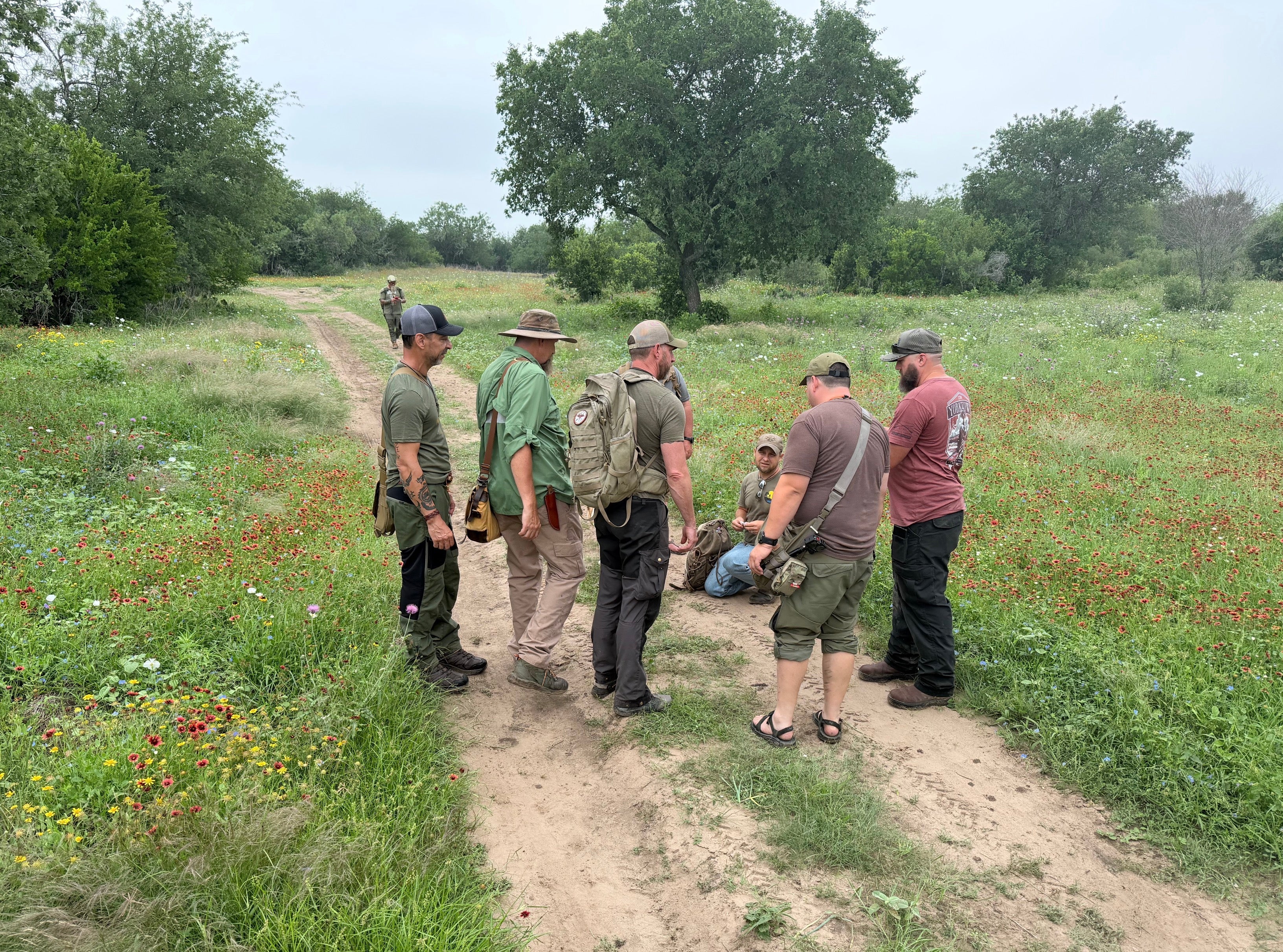
Recently, I (Nick) spent 5 days at Echoes of the Ancestors near Wilcox, Arizona. A class taught by Phillip Liebel of Primitive Wilderness Survival and David Holladay, a stone-age skills living legend. It included assistant instruction by Jonathan Burton and Jacks Genega as well. We had about a dozen students of all different skill levels learning the desert through the fundamentals: shelter, water, fire, natural materials, and the frequent colorful narratives provided by Mr. Holladay. The class concluded with the final test of sorts, a trek into the desert for a solo overnight with minimal (or no) gear. The course is described by the host as a five-day immersion in ancestral and modern skills, and boy, did it deliver!

The Ancestral Way
Exposure like this has a way of knocking our day-to-day worries down to size.
A lot of things we call hard are mostly just inconvenient, inefficient, or uncomfortable. This was a hands-on reminder of what that actually feels like. Not dramatic. Not theatrical. Just steady, physical problem-solving. Finding a workable shelter spot. Leveling ground with a digging stick. Harvesting dried grass and lashing it into bundles to keep off the cold ground. Moving stones into place for windbreaks, heat retention, and a little more mercy from the cool night air.
This is the part that earns respect.
Primitive skills are not impressive because they are old and nearly forgotten. They are impressive because all people once lived this way. Not for a weekend. Not for content. Not for a certificate. This was life. Fire was not a hobby. Shelter was not a fun side quest. Water was not just for the experience. It was the everyday existence of our ancestors.
That deserves a little reverence.

Primitive Skills, Recent History
It is easy to talk about “our ancestors” in a vague, museum-glass sort of way, but the numbers bring things into perspective. Homo sapiens have been around for roughly 300,000 years, and the transition to agriculture only began within the last 12,000 years. In other words, about 96% of human existence happened as hunter-gatherers, depending directly on skills like finding water, making fire, building shelter, processing materials, and reading the land.
The industrial world is barely a blip by comparison. The 1760s marked the beginning of human life shifting from the pace of hands, animals, and nature to the pace of engines, factories, and mass production. This modernization occurred in only the most recent 0.1% of our existence.
In that tiny sliver of time, we have done some wildly impressive things as a species, like medicine, plumbing, engines, electricity, mass production, and more comfort and convenience than our ancestors could have ever imagined. But we have forgotten so much and created a huge separation from the natural world - the world that shaped us for the other 99.9% of our history.
That disconnect is not just philosophical. Research consistently links increased time in nature with lower stress, better mood, and improved mental health.
(Take this as your reminder to go get some time in nature!)

A Ceremonial Sendoff
With the first few days of desert familiarization and skills practice behind us, the solo journey day had arrived. It started with some inspirational excerpts from the Outdoor Survival Skills book by Larry Dean Olsen, referencing why challenging ourselves like this matters. We were given the opportunity to continue practicing and preparing through the afternoon, but 3 of us (including Patrick Diedrich of RecoilOffgrid) decided to make the most of our experience and set out early that morning. The whole group was gathered together in a surprisingly impactful, quiet sendoff. Lined up in a semi-circle around us, offering silent thoughts of support and guidance as we set off toward our own unknown destinations.
I went minimal, challenging myself on hydration (and doing a bit of gear testing at the same time). Here’s the gear I walked into the desert with:
-
Container - Emergency Reservoir and 2 purification tablets I pulled from my Cache Belt
-
Knife - The aptly named Desert Nomad by Primitive Wilderness Survival
-
Jacket - wrapped up in a multi-purpose cloth for easy carrying
If you’re not familiar with it, the Emergency Reservoir is a 1-liter, food-safe plastic bag. It’s heat-safe up to 400 Degrees so you can actually boil in it over coals if needed - but all my safe drinkable water would rely on a thin plastic bag, in an environment known for prickly, pokey plants.

Lessons From The Desert
With a personal goal of reconnecting with nature, I set off in search of inspiration. I covered about 6 miles of terrain with no expectations, no hard plans, just experiencing what the desert had to offer: rock ledges to climb, grassy plateaus to cross, shady wooded draws to rest, and noting potential water sources along the way. Scattered deer bones, chewed over by coyotes, added a little punctuation along the way. Nothing abnormal, just a reminder of the desert being honest.
Knowing that everything I’d need would have to be crafted from the land, I became more aware of my surroundings. Not just taking in the beauty of the landscape, but seeing the possibilities in it and the resources it provides. Tall sotol stalks for fire. Dried grass clumps for bedding. Animal trails that join to point toward water sources.
That shift in perception is one of the real gifts of learning primitive skills.
It is not just about doing things the hard way. It is about appreciating what is around you, learning the land, and remembering how much knowledge is hidden in plain sight.

Sleeping Under a Tree
A large juniper tree grabbed my attention. It stood taller than most surrounding trees, it provided ample shade, soft workable soil underneath its bows, it was only a stone’s throw from a water source, and was situated in the golden zone part way up the slope - not too high up in the wind, and not too low down in the valley where the cold night air would settle. Best of all, it came with a beautiful view. This would be home for the night.

I sat down to take a quick rest in the shade of my tree shelter and start planning my next steps. There was one small rock at my feet that I had a strong urge to pick up. I couldn’t help but chuckle when I found it to be a perfectly shaped stone for cutting and notching a fire kit. It felt like I was being issued a challenge by some unseen force. And though I’ve made a few hand drill and bow drill fire kits before, but I had never done it without a knife. This was my new goal.
I came to reconnect with nature and it doesn’t get any more primal than fire from sticks and and a rock.
Spirit of fire by friction
It was mid-afternoon at this point. After a quick rest and few sips of water, I took to leveling a spot under the tree. I walled in a long narrow stone fire pit to hold coals in hopes of keeping most of my body warm through the night (without catching my grass sleeping mat on fire). With an initial batch of firewood gathered, the stage was set to see if I could make this happen.
The large stalk of sotol was scored then snapped to length to make a hearth board. I peeled each side off to give somewhat of a level work surface. The spindle was quickly sanded on a large nearby stone, but it was rough on my already battered hands. I burned in the initial hole and then ground the notch. This was it. This was the moment of truth.

Calm mind, focused on the task at hand, and making sure to remember to breathe, I started making passes down the spindle. Slow and steady at first, feeling the rhythm and filling the notch with dust. Then faster with smoke starting to roll. Then more pressure to bring it to life. With muscles fatiguing and hands blistering, I pushed on, past the point of “thinking” there’s an ember because the extra effort in this moment, no matter how exhausting, is energy better spent than having to start over from the beginning. Dust and smoke were spilling out of the notch. I had to be close but wasn’t willing to stop until I knew for sure.
Relief came in the form of a gentle breeze. Just enough wind to illuminate the warm cherry red glow within. I had done it! It was so small and fragile, yet so huge and impactful at the same time.
That is the strange magic of fire.

A little glow that means warmth, light, and comfort. After placing it in the tinder bundle and blowing it to flame, it felt like seeing an old friend again. It brings a feeling of connection. Maybe to our ancestors or something in our DNA, but it just feels right. Fire does that. It shifts mood, options, and confidence all at once.
Fire truly is one of our oldest and most versatile tools.

What Primitive Skills Really Teach
Experiences like this do not make modern gear feel less important. Quite the opposite, in fact. Once you have spent effort solving basic problems the slow way, good equipment becomes priceless. It saves time. It reduces risk. It gives that extra margin when conditions get worse, time is of the essence, or energy and mental capacity run low.
That is a big part of how we think about gear at Wazoo.
We are not interested in replacing knowledge with gadgets or pretending tools matter more than skill. The more you learn, the more you respect both. Experience teaches you what can go wrong, what takes longer than expected, and how quickly things can go from uncomfortable to unsustainable.
Good gear has its own potential, but it’s skill and experience that broadens the horizon to more. Together, they shape your true individual capability.

Respect the old ways. Appreciate the new.
Learning the “old ways” gives you a deeper appreciation for the convenience of modern innovations. It teaches that carrying the right tools is not laziness. It is wisdom. Not because everyone should skip learning how to make fire with sticks and stone, but because experience teaches how valuable it is to have reliable options close at hand when you need them. It’s peace of mind. It’s confidence. It encouragement to get out and do more.
That is the sweet spot.

Why everyday gear matters
It is easy to see why tools and resources matter in extreme situations. The harder part is knowing when one of those moments will arise. Some environments and activities carry more risk than others, but the only real way to ensure you have the things you need when you need them is to carry them every day.
That’s why we started Wazoo. We integrate functional tools into everyday wearable items like fire starter necklaces and hats and belts with hidden pockets for storing tools.
And it is not just about the extremes.
Everyday carry creates everyday opportunities to practice. To improvise. To notice problems sooner. To solve little things with the tools already on you. That is how skill and experience grow. And when gear, skill, and experience start meshing together, that is capability.

SHOP BEST SELLERS
Related FAQ's
What are primitive skills?
Primitive skills are foundational human skills like making fire, finding water, building shelter, and using natural materials from the land.
Why learn primitive skills if you carry modern gear?
Learning primitive skills builds awareness, judgment, and appreciation for what gear really does. Gear and skill work better together than either does alone.
What is friction fire?
Friction fire is a fire-making method that creates heat by rubbing wood components together, such as with a hand drill or bow drill, until an ember forms.